AI is already recommending someone. Is it you?
Two minutes. Five questions. Your score and your biggest gap. No call required to see it.
More decisions now begin with AI. What it can find, verify, and explain about your organization increasingly shapes who gets considered.
The question used to be "Can Google find you?"
Now people ask AI directly, and it answers with a shortlist instead of a page of links. When the evidence is thin, it fills the gap with whatever it can confirm about someone else.
> Who should we shortlist for this?
It is not only happening in boardrooms. Here is a real answer one AI system gave about a single Newton village.
A list of links. You decide who to trust.
You do the sorting. The system just points.
One confident answer. Repeated as fact.
3 of 6 closed. 1 attraction in the wrong village.
This is what AI told a customer about Newton.
Query run in Microsoft Copilot, May 14, 2026. Screenshot on file.
If AI gets a whole village wrong, what is it saying about your organization?
Which one are you?
My competitors keep showing up in AI answers. We don't.
We measure what AI can verify about you today, show you the prioritized gaps, and close them in a defined order.
For business leadersMy board is asking about AI. I need more than a policy.
We start with the decision your board needs to make, then turn it into practice your staff can actually follow.
For nonprofit leadersHer career said executive. Her LinkedIn profile didn't.
Executive VisibilityIn the 90 days after: nearly half the profile views of Kimberly's entire prior year — 217 against 473.
And three recruiters reached out, with no resume sent.
The profile transformation improved how this executive's value is presented. Any downstream career outcomes reflect many factors beyond the profile itself.
Read the full scorecard and case study →Same career. Same person. Presented so a machine can find it.
A 100 point assessment and strategic rebuild of public evidence for boards, buyers, and AI systems.
Engineering discipline. Executive context. Verifiable evidence.
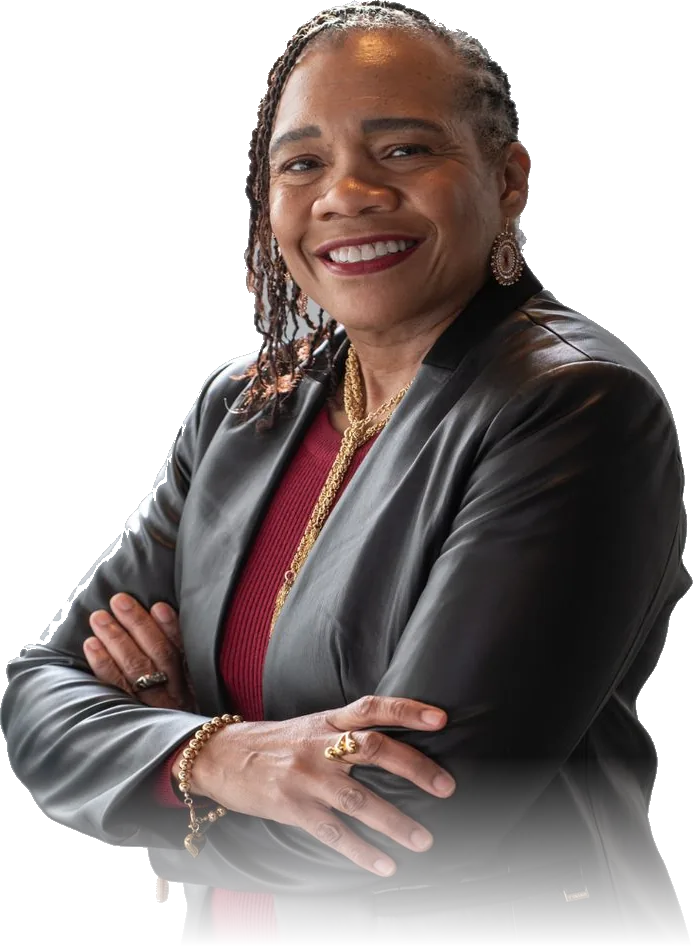
Angela Pitter spent 25 years in global technology leadership before founding LiveWire Collaborative in 2012. The work combines systems thinking, executive visibility, AI governance, and measurable evidence, so a leader can answer a board, a buyer, a funder, or an AI system from the same set of facts.
- 25 years technology leadership
- Founded 2012
- TEDx 2026 Speaker, Editor's Pick
- Board Chair, Charles River Regional Chamber of Commerce
- Commonwealth Heroine
- 50 Most Influential Business Leaders of Color
This was not a workshop. It was an operating blueprint.
Meet Boston, formerly the Greater Boston Convention and Visitors Bureau, hired LiveWire to assess and audit its digital footprint and set strategy for the All Inclusive Boston launch. This is what the engagement contained, and what it produced.
Depth behind it. An 8 point evaluation producing a 200 page report. The deliverable the client acted on was the blueprint.
"The depth of Angela's insights gave us a crystal clear blueprint. Our team was blown away."
"I recommend Angela Pitter, LiveWire Collaborative to any organization that needs a reset and help to create a blueprint that'll push them to the next level."
AI creates two leadership risks.
What AI says about your organization
Can systems accurately find, understand, and substantiate you when a buyer, board, funder, or partner asks who to trust?
What your organization does with AI
Can your board, staff, clients, and partners trust how you use it? Governance usually starts after AI use has started, not before.
One methodology, run in order.
Start
Establish what AI can verify today.
Document
Turn what is true into what is checkable.
Decide
Prioritize the gaps that change decisions.
Implement
Publish evidence where systems read it.
Sustain
Keep it accurate as you change.
Every step is measured on the same rubric, every result is attributed to a real name and title, and the work is sequenced rather than run as a one-off campaign.
Four questions you are probably asking.
Isn't this just SEO with a new name?
No. Search optimization competes for a position on a page of results. This is about whether a system can confirm a claim about you well enough to repeat it to someone else. Different mechanism, different work, different evidence. We will not use the words ranking or keyword with you.
Can anyone actually influence what an AI says?
Not directly, and anyone promising that is selling you something. What you control is what exists to be found: whether your claims are documented, dated, attributed, structured, and consistent across independent sources. Systems substantiate what they can confirm. That part is entirely in your hands.
How would I know it worked?
A score before, a score after, on the same rubric, with the components broken out so you can see which one moved. The organizational engagement applies the same discipline to your own evidence.
Where is your evidence strongest today?
Our published before and after measurement is currently strongest in Executive Visibility. Our organizational work spans audits, competitor benchmarking, campaign strategy, team visibility, AI adoption, and governance. As more organizational engagements reach publishable measurement points, those results are added here.
Ask on the call about the work we cannot publish.
Find out what AI says about you right now.
Two minutes. Five questions. Your score, your biggest gap, your next step. No report to wade through and no call required to see the result.
Check my AI visibility